
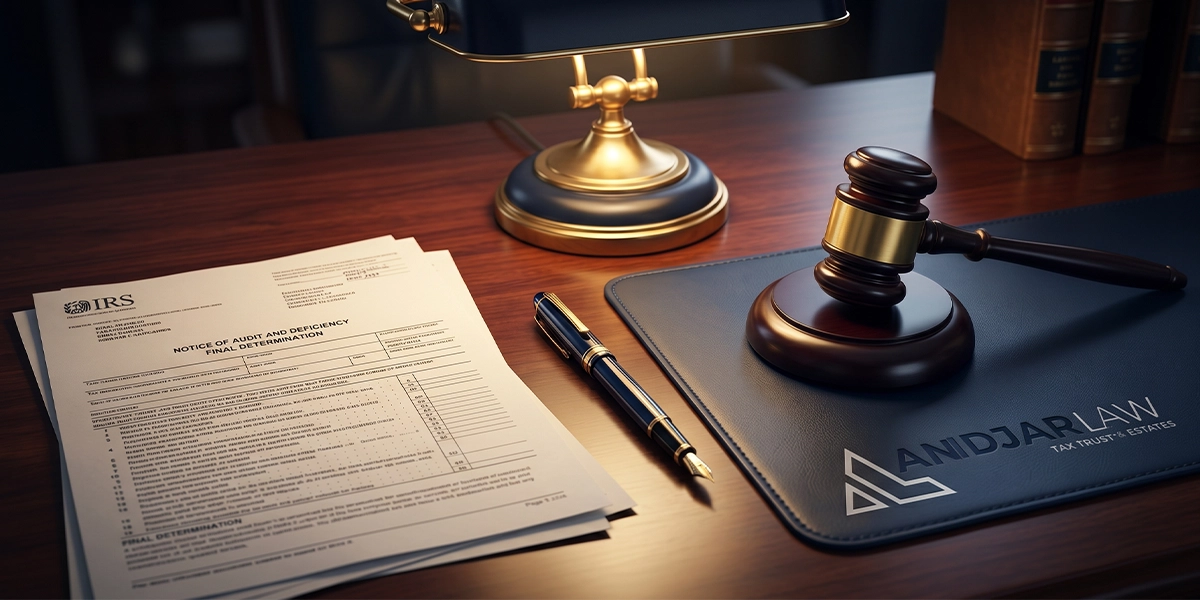
Practitioners are widely treating this date as a critical deadline to file protective claims for many COVID-period IRS penalty, interest, and refund issues.
Two recent federal court decisions, Abdo v. Commissioner and Kwong v. United States, have reshaped how penalties, interest, and filing deadlines tied to the COVID-19 disaster period should be calculated. For taxpayers who were assessed late-filing penalties, late-payment penalties, or underpayment interest during that period, the result may be a genuine refund opportunity. But the window to preserve those rights is measured in months, not years.
The Short Version
- Two court rulings (Abdo and Kwong) found the IRS may have improperly assessed penalties and interest during the COVID disaster period — January 20, 2020 through July 10, 2023.
- If you already paid those penalties or interest, you may be owed a refund.
- It is not automatic — you must file Form 843 (Rev. December 2024). The protective-claim deadline for most taxpayers is July 10, 2026.
- The IRS has appealed, so filing a protective claim now preserves your rights while the law is unsettled.
- A tax attorney can review your IRS transcripts to tell you whether you have a claim.
A Quiet Shift With Real Financial Consequences
When most people think about COVID-era tax relief, they think of extended April deadlines and stimulus checks. Few think about the deeper statutory question of whether the entire COVID disaster period, running well beyond 2020, must be disregarded for purposes of federal tax penalties, interest, and limitations periods.
That is exactly the question two courts recently answered, and their answers may entitle a significant number of taxpayers to relief the IRS has not voluntarily offered.
The National Taxpayer Advocate has warned that tens of millions of taxpayers — individuals, small businesses, corporations, estates, and trusts — may be entitled to refunds or abatements of COVID-period penalties and interest, while emphasizing that this relief is not automatic. Most affected taxpayers must file by July 10, 2026 to preserve their rights.
In Abdo v. Commissioner, 162 T.C. 148 (2024), the United States Tax Court held that Internal Revenue Code section 7508A(d) provides a mandatory, self-executing postponement period for qualifying taxpayers and that Treasury regulations could not narrow that statutory relief. In Kwong v. United States, 179 Fed. Cl. 382 (2025), the United States Court of Federal Claims applied that framework broadly and concluded that, for COVID-19, the relevant postponement period extended through July 10, 2023.
Under the reasoning of Abdo and Kwong, deadlines that fell within the COVID disaster period may have been postponed by statute, which means penalties computed as if the ordinary deadlines remained in force may have been improperly imposed.
Background: Section 7508A and the COVID-19 Disaster Period
Section 7508A of the Internal Revenue Code historically allowed the Treasury Secretary to postpone certain tax deadlines for taxpayers affected by federally declared disasters. In 2019, Congress added subsection (d), which imposed a mandatory postponement period for qualified taxpayers.
Under the pre-November 2021 version of that provision, the period beginning on the earliest incident date in the disaster declaration and ending 60 days after the latest incident date was to be, in the language of the statute, disregarded in the same manner as a period specified under section 7508A(a).
During the COVID-19 emergency, FEMA disaster declarations described the incident period as beginning January 20, 2020 and continuing. That open-ended language is central to the dispute now playing out in the courts.
What Abdo Held
In Abdo, the taxpayers filed a Tax Court petition after the ordinary 90-day deadline but within the broader COVID-related statutory window. The IRS argued that Treasury regulations limited the mandatory postponement period. The Tax Court rejected that position.
The court held that section 7508A(d) is mandatory and self-executing, and that the regulation could not override the unambiguous statute. Specifically, the Tax Court invalidated Treasury Regulation section 301.7508A-1(g)(1) and (2) to the extent the regulation attempted to limit the mandatory postponement period to only those acts the Secretary had separately chosen to postpone under discretionary authority.
The practical significance is simple. The IRS cannot rely on narrow administrative guidance to cut back relief that Congress already provided by statute. The courts' refusal to defer to the limiting Treasury regulation is consistent with the Supreme Court's 2024 decision in Loper Bright Enterprises v. Raimondo, which ended the longstanding Chevron deference doctrine. Commentary in 2026 has described Abdo as final and not appealed.
What Kwong Held
In Kwong, the Court of Federal Claims considered whether a refund suit was timely. Applying the framework recognized in Abdo, the court concluded that the COVID-19 disaster period under section 7508A(d) extended through July 10, 2023.
The court noted that the statutory text applied even though Congress may not have anticipated a disaster declaration lasting that long. Whether characterized as tolling or as postponement, the taxpayer's filing was timely under the statute as interpreted by the court.
Although Kwong arose in the refund-suit timeliness context, practitioners are using its reasoning more broadly to support challenges to penalties and interest assessed by reference to due dates that fell within the COVID disaster period.
A word of caution. Kwong is a Court of Federal Claims decision, not a Supreme Court or court of appeals decision. It is influential, but not binding everywhere. The IRS has appealed Kwong to the U.S. Court of Appeals for the Federal Circuit, and the matter is now pending. Because the appeal could affirm, narrow, or reverse the decision — and is unlikely to be resolved quickly — this is a major reason practitioners are advising clients to file protective claims now rather than wait for the appellate dust to settle.
The Three Categories of Potential Relief
Depending on the facts, these cases may support several distinct forms of relief. Each has a different risk profile and a different potential recovery size.
| Category | What It Covers | Relative Strength |
|---|---|---|
| Late-filing and late-payment penalties | Failure-to-file or failure-to-pay penalties tied to return or payment deadlines that fell within the COVID disaster period. | Strongest use case. Deadlines may have been postponed by statute, making penalties computed on ordinary deadlines improper. |
| Underpayment interest | Interest that accrued during the COVID period on underpayments of tax. | More aggressive, but potentially the largest dollar recovery. Commentary and practitioner analyses identify this as an active and developing area. |
| Limitations-period arguments | Refund claims or refund suits that appear time-barred under the IRS's standard view, but remain arguable under the broader section 7508A(d) framework recognized in Kwong. | Fact-specific. One of the main reasons the period running through July 10, 2026 is being treated as especially important. |
Who May Be a Good Candidate
The strongest cases tend to share two features: clear overlap between the COVID statutory period and the due date or accrual period, and clean transcripts that allow the claim to be reconstructed in a straightforward way. Potentially strong candidates include taxpayers who incurred:
- Failure-to-file penalties for returns due during the COVID period;
- Failure-to-pay penalties for balances tied to due dates during that period;
- Underpayment interest that materially accrued during that period; or
- Claims that appear time-barred under the IRS's standard view but may remain timely under Kwong's reading of section 7508A(d).
This can reach individual income tax, business income tax, employment tax, estate tax, gift tax, and other federal tax obligations, depending on the facts.
A Time-Sensitive Deadline: July 10, 2026
Because the law is still developing, and because Kwong may be appealed, practitioners are widely treating July 10, 2026 as a critical protective-claim deadline for many COVID-period claims. Filing a protective claim generally preserves a taxpayer's rights even if the precise computation is supplemented later. Waiting may result in losing the ability to pursue a refund at all.
How a Claim Gets Built: The Five-Step Procedure
Building a claim under Abdo and Kwong is not a matter of filing a one-page form and hoping. It is a disciplined, evidence-driven process.
1. Identify potentially affected tax years and liabilities.
The first step is identifying all federal tax periods in which a filing deadline, payment deadline, penalty accrual, or interest accrual may have overlapped with the COVID disaster period running from January 20, 2020 through July 10, 2023.
2. Obtain and review IRS transcripts.
The taxpayer should obtain the relevant IRS account transcripts for each potentially affected period. These transcripts are reviewed for return filing dates, assessment dates, penalty transaction codes, interest assessments, payment dates, and any other entries necessary to determine whether the taxpayer has a viable claim and whether the claim is for refund or abatement.
3. Separate refund claims from abatement requests.
If the taxpayer has already paid the penalties or interest at issue, the appropriate administrative procedure is typically a refund claim, usually on Form 843, Claim for Refund and Request for Abatement. If the amounts remain unpaid, the taxpayer may request abatement and, where collection is active, may also raise the issue in a Collection Due Process context.
4. File protective claims promptly.
Because of the uncertainty surrounding limitations periods and the likely appellate path of Kwong, many practitioners are recommending protective Form 843 filings before July 10, 2026. A protective claim generally identifies the taxpayer, tax period, legal basis, and nature of the relief requested, while preserving the claim even if the precise computation is supplemented later. A strong protective claim should state its legal basis clearly — and where appropriate can cite both Kwong and P.L. 119-64 (enacted December 26, 2025), which independently directs that disaster-period postponements be treated as extensions of the return deadline for refund-lookback purposes. Citing both gives the IRS two independent grounds to grant relief.
5. Be prepared for denial, protest, or litigation.
The IRS may deny or partially deny these claims. If that happens, the taxpayer may need to consider administrative protest, Appeals, or litigation depending on the posture of the claim. For paid claims, refund litigation may be available after exhaustion of administrative requirements. For collection matters involving unpaid assessments, the taxpayer may also consider raising the issue through Collection Due Process channels where appropriate.
Risks and Limitations: A Realistic View
This area is promising, but it is not plug-and-play. Three realities are worth keeping in mind.
First, Kwong is a Court of Federal Claims decision. It is influential, but not binding nationwide.
Second, the IRS may resist broad concessions administratively, especially as to interest and limitations-period arguments. Some claims will likely require continued pressure past an initial denial.
Third, the amount and type of relief will depend heavily on the taxpayer's transcripts, due dates, filing dates, payment history, and whether the amounts at issue have already been paid.
This is not free money falling from the ceiling tiles. It is a real opportunity, but one that likely requires proper positioning and, in some cases, a willingness to keep fighting after an initial IRS denial.
Frequently Asked Questions
Can I get a refund for IRS penalties I paid during COVID? You may be able to. Under the Abdo and Kwong decisions, many late-filing penalties, late-payment penalties, and underpayment interest tied to deadlines that fell within the COVID disaster period (January 20, 2020 – July 10, 2023) may have been improperly imposed. If you already paid those amounts, you can generally seek a refund by filing IRS Form 843 — but you must act before the July 10, 2026 deadline.
Who qualifies for a COVID IRS penalty refund? The strongest cases involve failure-to-file penalties, failure-to-pay penalties, or underpayment interest connected to filing or payment deadlines that fell between January 20, 2020 and July 10, 2023. This can reach individual, business, employment, estate, and gift tax obligations, depending on the facts. Whether a particular claim works depends on your specific transcripts and payment history.
How do I file IRS Form 843 for a COVID penalty refund? In short: identify the affected tax periods, obtain your IRS account transcripts, determine whether you need a refund (if already paid) or an abatement (if unpaid), and file Form 843 stating the legal basis before July 10, 2026. Because the law is still developing, many taxpayers file a protective claim now to preserve their rights. A tax attorney can prepare and document the claim to improve its chances.
What is the July 10, 2026 deadline? It is the date by which most affected taxpayers must file a protective refund claim to preserve their rights. It follows from Kwong, which treated the COVID disaster period as running through July 10, 2023 — three years later is July 10, 2026. Missing it may mean losing the ability to pursue the refund.
Can I still file if the IRS is appealing the Kwong decision? Yes — and that is exactly why filing now matters. The IRS has appealed, and the outcome won't be known for some time. Filing a protective claim before July 10, 2026 preserves your right to a refund if the courts ultimately side with taxpayers, even though the IRS is not issuing refunds today.
What is the Kwong case? Kwong v. United States is a 2025 U.S. Court of Federal Claims decision holding that the COVID-19 disaster period postponed federal tax deadlines from January 20, 2020 through July 10, 2023. Together with the Tax Court's Abdo decision, it supports the argument that penalties and interest charged as if the ordinary deadlines still applied may have been improperly assessed.
The Bottom Line
Abdo and Kwong have created a meaningful, time-sensitive opportunity for some taxpayers to seek refunds or abatements of COVID-period IRS penalties and interest, and in some situations to assert that certain otherwise-expired deadlines remained open longer than the IRS has acknowledged.
Abdo strengthens the taxpayer's position by holding that section 7508A(d) is mandatory and self-executing. Kwong broadens the practical reach of that position by treating the COVID disaster period as extending through July 10, 2023.
Because the law is still developing and the IRS has appealed and may resist these claims, taxpayers who may be affected should consider prompt transcript review and protective administrative filings before July 10, 2026. The taxpayers who move first and move carefully are likely to be in the strongest position regardless of how the appellate landscape shifts over the next year.
Need Help Navigating Your COVID-Era Tax Penalties?
Contact our team today to evaluate whether filing a protective claim is right for your situation before the July 10, 2026 deadline.
Evaluate My SituationDisclaimer: AnidjarLaw is a South Florida firm based in Hollywood, Broward County, serving clients throughout the region on federal tax controversy matters. This article is provided for general informational purposes and reflects the state of the law as described in current commentary and court decisions. It is not legal advice and does not create an attorney-client relationship. Tax matters are highly fact-specific, and outcomes depend on the particulars of each taxpayer's situation.
