


This is Part 3 of our 2026 Florida Property Tax Series.
The best valuation analysis does not preserve a VAB claim if the petition arrives late. Florida's filing period is short, county procedures differ, and an informal discussion with the Property Appraiser does not stop the clock. The deadline is the first task, not the last.
Table of Contents
- 2026 Deadlines to Challenge Market or Assessed Value
- Step 1: Calendar the Correct Deadline
- Step 2: Request Informal Review Without Giving Up Time
- Step 3: Select and Complete the Correct Petition
- County Filing Snapshot for 2026
- Step 4: Build the Evidence File Around January 1
- Step 5: Observe the Evidence-Exchange Schedule
- Step 6: Prepare for the Special-Magistrate Hearing
- Settlement and Withdrawal
- Pay Taxes While the Petition Is Pending
- Late Filing Requires Good Cause
- Preserve Judicial Remedies
- Final Filing Checklist
- When Professional Review Often Makes Sense
- Frequently Asked Questions
- Primary Sources and Further Reading
2026 Deadlines to Challenge Market or Assessed Value
| County | 2026 Valuation-Petition Deadline |
|---|---|
| Broward | September 18, 2026 |
| Miami-Dade | September 18, 2026 |
| Palm Beach | September 14, 2026 |
| Collier | September 11, 2026 |
| Lee | September 11, 2026 |
Step 1: Calendar the Correct Deadline
For market- or assessed-value petitions, the ordinary deadline is 25 days after the Property Appraiser mails the TRIM notice. Because mailing dates vary, county deadlines vary. Petitions involving denied exemptions, classifications, deferrals, portability, or change of ownership may run from a different notice and use a different period. Saving the notice, the envelope, and the electronic filing confirmation preserves the record of what was mailed and when.
Step 2: Request Informal Review Without Giving Up Time
Contacting the Property Appraiser promptly, and asking for the property record card, valuation worksheet, comparable sales, cap history, and an explanation of any ownership or exemption change, can correct data errors or narrow the dispute. Informal review does not extend the petition deadline, and a promise to “look into it” is not a filed petition. When time is short, owners commonly file a protective petition and continue the informal discussion afterward, since a filed petition can always be withdrawn once the issue resolves.
Step 3: Select and Complete the Correct Petition
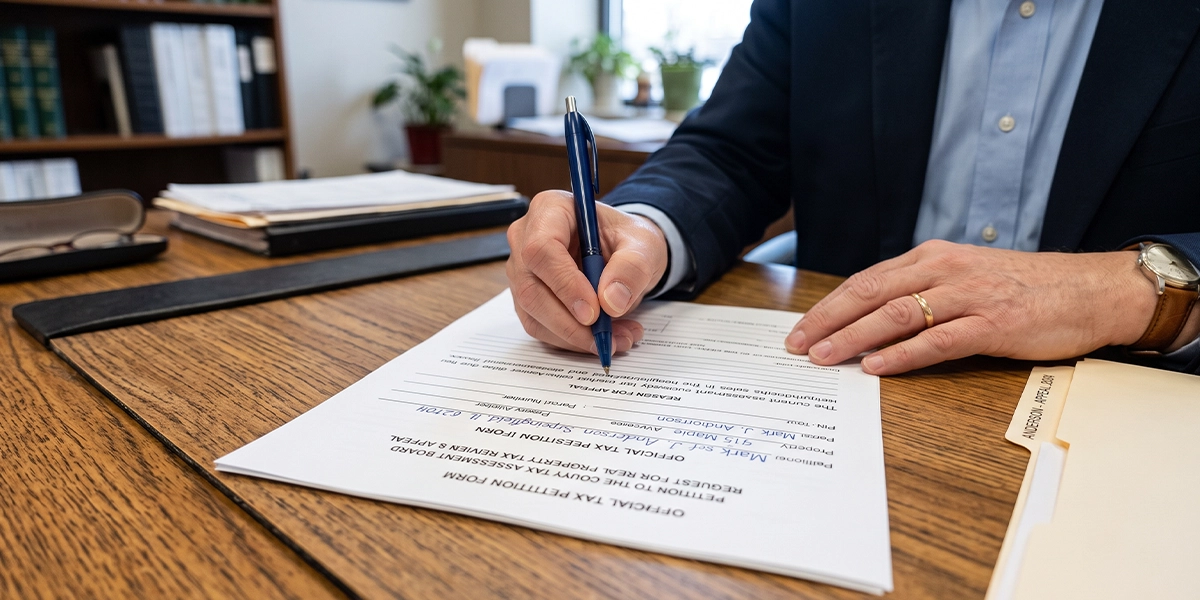
Form DR-486 is commonly used for real-property value and several other VAB issues; portability disputes use Form DR-486PORT. The petition identifies the parcel, tax year, petition type, requested value or relief, representative, and hearing preference. Every required item must be answered, the petition signed through an authorized person, any required agency authorization attached, and the correct fee paid. A petition is not the place for an unfocused narrative: the stronger filings state the precise issue and preserve supporting grounds.
County Filing Snapshot for 2026
| County | Deadline | Typical Filing Route | Published Fee |
|---|---|---|---|
| Broward | Sept. 18 | Online; mail/deliver to VAB, 115 S. Andrews Ave., Room 120, Fort Lauderdale | $25 for petitions subject to the standard fee |
| Miami-Dade | Sept. 18 | Online; mail/in person at 111 NW First St., Suite 1720, Miami | $15 per folio; limited joint-petition exceptions |
| Palm Beach | Sept. 14 | Online through the Clerk's VAB system; confirm paper-filing instructions with Clerk | Up to $20 |
| Collier | Sept. 11 | Online by 11:59 p.m.; in office by 5 p.m.; mail/in person at 3299 Tamiami Trail E., Suite 401, Naples | $50 most petitions; $15 portability; card fee may apply |
| Lee | Sept. 11 | Online; mail or in person through Lee Clerk VAB; confirm current intake location | $30 standard petition |
County systems and fees can change. Confirm current payment, receipt, authorization, and delivery requirements on the clerk's official VAB site. Collier states that the petition is not filed until the fee is received. Miami-Dade expressly treats filing as receipt, so a timely postmark is insufficient.
Step 4: Build the Evidence File Around January 1
- TRIM notice, property record card, deed, and relevant ownership documents.
- Comparable-sales grid with dates, prices, similarities, differences, and adjustments.
- Dated photographs, surveys, plans, permits, inspections, engineering reports, and repair estimates.
- For income property: leases, rent roll, operating statements, vacancy history, expense support, and capitalization-rate evidence.
- A short written value conclusion that ties each exhibit to the requested relief.
The VAB and special magistrate will not infer a theory from an unlabeled stack. The stronger files label and paginate exhibits, identify the witness who can explain each one, and remove irrelevant personal information. One statutory caution under Fla. Stat. § 194.034: if the Property Appraiser requested information in writing and the petitioner knowingly refused to provide it, Florida law may restrict use of that material at the hearing.
Step 5: Observe the Evidence-Exchange Schedule
Fla. Stat. § 194.011 generally requires the petitioner to provide the Property Appraiser, at least 15 days before the hearing, an evidence list, copies of documents, and a witness-summary statement. If the petitioner complies and makes a written request, the Property Appraiser generally must provide its evidence no later than seven days before the hearing. County portals may impose upload procedures in addition to the statutory exchange. Both the exchange and hearing dates belong on the calendar as soon as the notice arrives.
Step 6: Prepare for the Special-Magistrate Hearing
Large counties use qualified special magistrates to take testimony and recommend decisions to the VAB. The hearing is focused and evidentiary. Petitioners should be prepared to identify the relief sought, explain the property and valuation date, present witnesses and exhibits, address the county's evidence, and answer questions, keeping the presentation organized around the governing valuation method and legal standard. The VAB later issues the final written decision.
Settlement and Withdrawal
A petition may resolve before the hearing if the Property Appraiser agrees to correct value, data, cap treatment, or another issue. The exact revised values and tax-year effect deserve written confirmation before any withdrawal, because a settlement for one roll does not necessarily control later years. If no agreement is reached, preserving the hearing and evidence schedule keeps negotiations from creating a default.
Pay Taxes While the Petition Is Pending
A pending petition does not permit the owner to ignore the tax bill. For a valuation challenge, Fla. Stat. § 194.014 generally requires payment of all non-ad valorem assessments and at least 75 percent of the ad valorem taxes before delinquency. Other petition types have different payment rules. Failure to make the required payment can result in denial of the petition. The amount and deadline can be confirmed with the Tax Collector, with proof of payment retained.
Late Filing Requires Good Cause
A late valuation petition may be considered only if the petitioner establishes good cause under governing law and local procedure, supported by a specific statement and records showing why timely filing was not possible. Good cause is not automatic, and the filing fee may remain nonrefundable even if the request is denied. Late filing is a remedy of last resort, not a planning strategy.
Preserve Judicial Remedies
A taxpayer may pursue circuit-court relief under Fla. Stat. § 194.171 whether or not a VAB petition was filed, but strict jurisdictional timing and payment requirements apply. The deadline is not always a simple “60 days after the VAB decision”; it can depend on tax-roll certification, any extension, final VAB action, and recertification. Advice obtained immediately after an adverse decision, or earlier if litigation is being considered, allows the operative deadline to be calculated from the actual roll history.
Final Filing Checklist
- Confirm the petition type, parcel number, tax year, and exact deadline.
- File through an approved method early enough to cure payment or signature problems.
- Save a timestamped receipt and a complete copy of everything submitted.
- Request the Property Appraiser's evidence in writing after timely exchange.
- Calendar evidence, hearing, tax-payment, and post-decision dates separately.
- Confirm any resolution in writing before withdrawing.
Treat the deadline as the first task, not the last. The best valuation analysis preserves nothing if the petition arrives late.
When Professional Review Often Makes Sense
Immediate review tends to be worthwhile when the disputed value is substantial, the property is commercial or unique, the trust, estate, entity, ownership transfer, cap, or portability, expert appraisal evidence is needed, or circuit-court litigation may follow. Early involvement allows counsel and appraisers to develop one consistent theory rather than repair a record after the hearing.
Frequently Asked Questions
What is the deadline to file a Florida VAB petition?
For market- or assessed-value petitions, the ordinary deadline is 25 days after the Property Appraiser mails the TRIM notice, so deadlines vary by county. For 2026, published valuation-petition deadlines include September 18 for Broward and Miami-Dade, September 14 for Palm Beach, and September 11 for Collier and Lee. Petitions involving denied exemptions, classifications, deferrals, portability, or change of ownership may run from a different notice and use a different period.
What form is used to file a VAB petition?
Form DR-486 is commonly used for real-property value and several other VAB issues; portability disputes use Form DR-486PORT. The petition identifies the parcel, tax year, petition type, requested value or relief, representative, and hearing preference, and it must be signed through an authorized person with any required agency authorization attached and the correct fee paid.
Do I still have to pay my property taxes while a VAB petition is pending?
Yes. For a valuation challenge, section 194.014 generally requires payment of all non-ad valorem assessments and at least 75 percent of the ad valorem taxes before delinquency. Other petition types have different payment rules, and failure to make the required payment can result in denial of the petition.
What happens if the VAB petition deadline is missed?
A late valuation petition may be considered only if the petitioner establishes good cause under governing law and local procedure, supported by a specific statement and records showing why timely filing was not possible. Good cause is not automatic, and the filing fee may remain nonrefundable even if the request is denied. Separately, a taxpayer may pursue circuit-court relief under section 194.171 whether or not a VAB petition was filed, subject to strict jurisdictional timing and payment requirements.
What evidence must be exchanged before a VAB hearing?
Section 194.011 generally requires the petitioner to provide the Property Appraiser, at least 15 days before the hearing, an evidence list, copies of documents, and a witness-summary statement. If the petitioner complies and makes a written request, the Property Appraiser generally must provide its evidence no later than seven days before the hearing.
A short filing window rewards early, disciplined review. AnidjarLaw works with Florida property owners on assessment analysis, legal and factual issues, valuation evidence, and VAB petitions and related strategy. If the questions discussed here touch your own property, we are glad to help you understand how they apply to your situation, while there is still time to evaluate the property and preserve available rights.
CONTACT US NOW2026 Florida Property Tax Series
You are reading Part 3.
Primary Sources and Further Reading
Current as of August 20, 2026. Deadlines and filing requirements can change; confirm statutes and county instructions directly.
Legal disclaimer: This article provides general information, not legal, tax, or appraisal advice. It does not create an attorney-client relationship. Outcomes depend on the facts, evidence, applicable law, and local procedures. Deadlines and filing requirements can change; confirm them directly with the appropriate Value Adjustment Board.
